
Walk into any grocery store in Karachi or Lahore today and you will spot a dozen different olive oil bottles sitting side by side. Some are golden yellow, some are deep green, some cost a fortune and others feel suspiciously cheap for what they promise. Most buyers grab one and hope for the best. That is a mistake, and this guide exists to fix it.
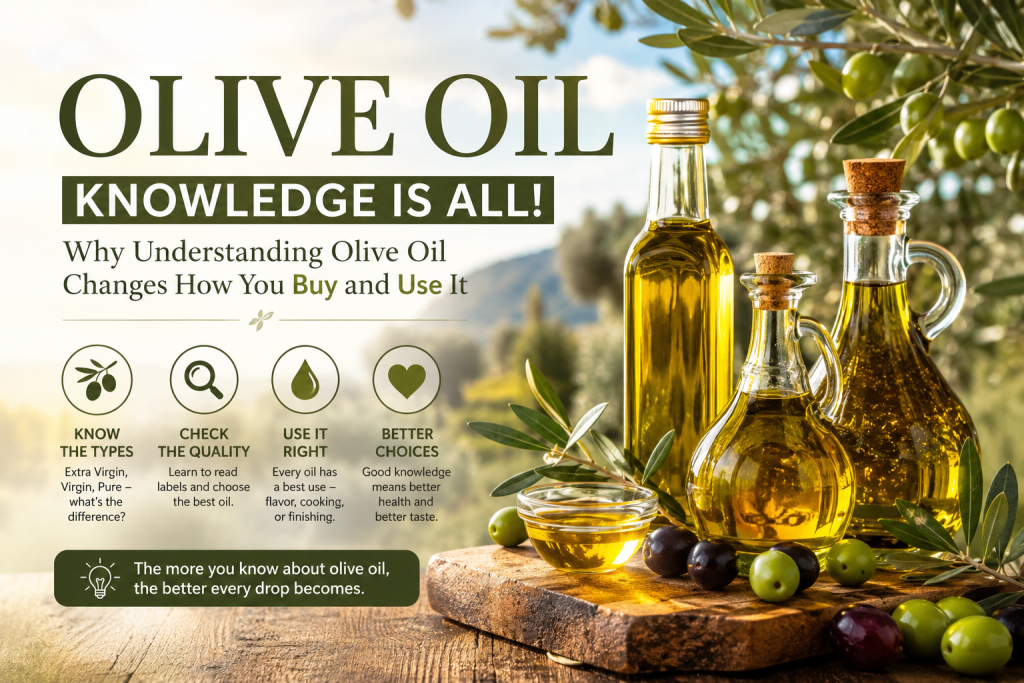
Olive Oil Knowledge Is All! Why Understanding Olive Oil Changes How You Buy and Use It
Here is an uncomfortable truth. Most people buying olive oil in Pakistan choose based on price or a familiar label, not on what is actually inside the bottle. That approach works fine for cooking oil brands you have used for years. It does not work for olive oil, where quality varies wildly between producers and even between harvests from the same farm.
Once you know what separates a genuine, high-quality bottle from a diluted or poorly stored one, your entire relationship with this oil changes. You start reading labels differently. You notice grading terms you used to skip past. You question why one bottle costs three times more than another. This guide walks you through that entire journey, one topic at a time, so shopping decisions become second nature rather than guesswork.
The Flowering of the Olive Tree: Where Every Great Olive Oil Begins
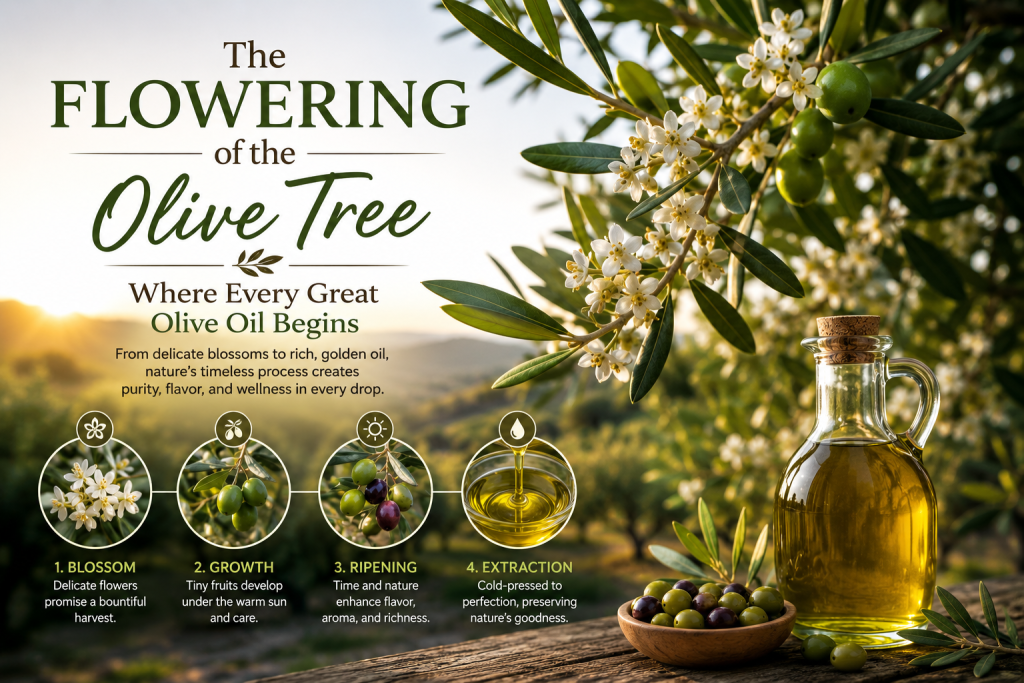
Every bottle starts long before harvest season, back when the olive tree is still flowering. This stage happens once a year, typically in late spring across Mediterranean climate regions like Spain, Italy, and Greece, where most premium oil originates. Small white flowers cover the branches for a short window, and what happens during this period decides how much fruit the tree will produce months later.
When does olive tree flowering occur, exactly? It depends on regional weather, but it generally spans a few weeks in April or May. During this time, wind pollination plays the leading role, carrying pollen between trees to fertilize the flowers. How does wind pollination affect olive trees? Poor wind conditions or unexpected rain can drastically reduce fruit set, meaning fewer olives survive and mature fully. This is why olive tree cultivation is as much about managing weather risk as it is about farming skill, and why a bad flowering season in Spain can tighten global supply and push prices up the following year.
Cold Pressed Extra Virgin Olive Oil: The Extraction Process That Matters
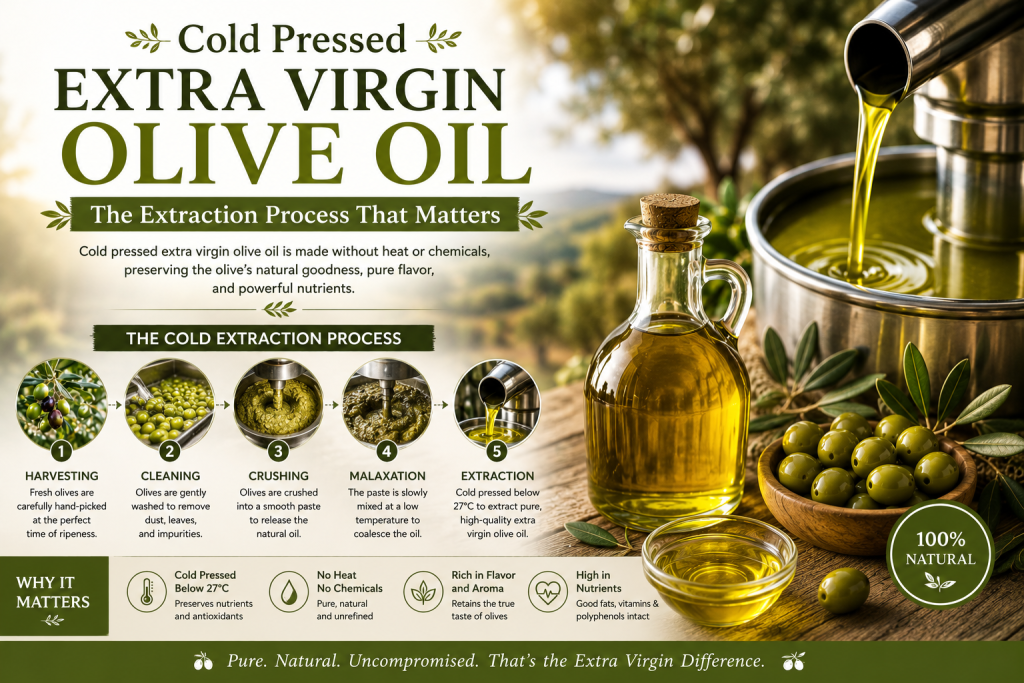
Once olives are harvested, the method used to extract oil determines almost everything about the final product’s flavor, nutrition, and shelf life. Cold pressing refers to extraction done without adding heat, keeping the entire process below roughly 27 degrees Celsius. This matters because heat destroys many of the delicate compounds that make extra virgin oil valuable in the first place.
How is cold pressed extraction made? Olives are washed, crushed into a paste, and then mechanically pressed or centrifuged to separate the oil from water and solids, all without external heating. Why temperature matters in extraction comes down to chemistry: higher heat speeds up the process and increases yield, but it breaks down antioxidants and alters the natural taste. That is precisely why cold pressed methods, though slower and less efficient, produce oil that retains more nutrients, sharper flavor, and a longer functional shelf life compared to heat-extracted alternatives sold under generic labels.
Understanding Olive Oil Acidity: What It Really Means for Quality
Few terms confuse buyers more than acidity levels. It sounds like it should relate to taste, sharp or sour, but that assumption is wrong. What is acidity in technical terms? It refers to free fatty acidity (FFA), a chemical measurement of how many fatty acids have broken away from their triglyceride structure, expressed as a percentage of oleic acid per 100 grams.
Under EU/IOC standards, extra virgin olive oil must have acidity below 0.8 percent, while regular virgin olive oil can go up to 2 percent. Here is the twist though: low acidity alone does not guarantee good flavor. An oil can technically pass acidity requirements while still tasting flat or having sensory defects. Acidity rises when olives are damaged, over-ripe, or processed too long after picking, so it works better as a freshness and handling indicator than a flavor predictor. Smart buyers check acidity alongside sensory quality, not instead of it.
| Olive Oil Grade | Maximum Acidity (FFA) | Typical Use |
|---|---|---|
| Extra Virgin Olive Oil | 0.8% | Salads, dips, finishing dishes |
| Virgin Olive Oil | 2.0% | Everyday cooking |
| Lampante Olive Oil | Above 2.0% | Refining only, not sold directly |
All About High Polyphenols Olive Oil: Nature’s Antioxidant Powerhouse
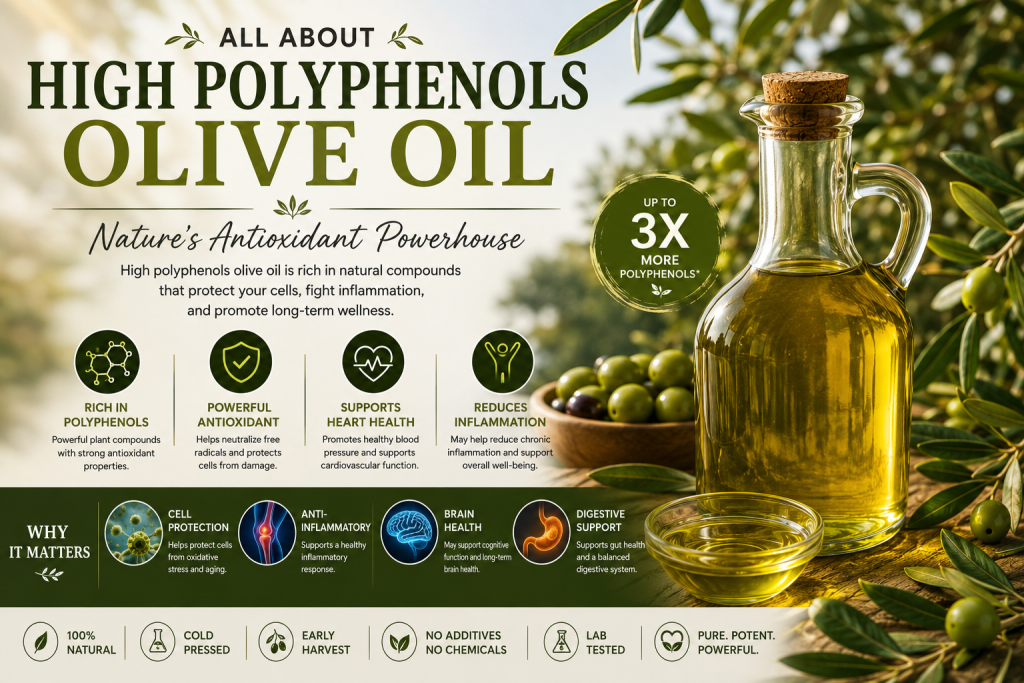
What is high polyphenols olive oil? It refers to extra virgin olive oil that retains an unusually high concentration of polyphenols, plant compounds known for their strong antioxidants properties. These compounds naturally occur in olives, but their levels in the final oil depend heavily on olive variety, harvest timing, and how gently the oil was extracted.
Polyphenol-rich oil offers real advantages beyond marketing hype. Research links these compounds to reduced inflammation, better heart health markers, and protection against oxidative stress in the body. For Pakistani households increasingly conscious about diabetes and cardiovascular risk, choosing a high-polyphenol bottle over a generic one is a small switch with meaningful long-term payoff. Flavor-wise, these oils tend to taste more bitter and peppery, a sensation experienced tasters actually seek out rather than avoid, since that sharpness signals freshness and potency rather than a flaw.
Unfiltered Extra Virgin Olive Oil: Raw, Rustic, and Full of Character
What is unfiltered olive oil? It is oil bottled shortly after extraction without passing through filtration to remove tiny olive particles and sediment. The result looks cloudy, sometimes with visible flecks settled at the bottom, which surprises buyers used to crystal-clear bottles on supermarket shelves.
Filtered olive oil versus unfiltered olive oil is largely a trade-off between shelf stability and intensity. Unfiltered versions carry a bolder, fresher flavor since the leftover olive solids continue contributing taste and aroma. However, those same particles can accelerate degradation over time, meaning how to store unfiltered olive oil correctly becomes essential. Keep it in a cool, dark place, away from direct sunlight, and consume it within a few months of opening rather than letting it sit for a year. Filtered oil, by contrast, lasts noticeably longer thanks to the removal of sediment that would otherwise speed up spoilage.
How Important Is the Color of Extra Virgin Olive Oil? (Debunking the Myth)
Ask any casual buyer what determines good olive oil color, and most will say deep green means better quality. That belief is widespread, and it is largely wrong. Professional tasters actually conduct evaluations in dark blue glasses specifically so color cannot influence their judgment, because appearance and taste correlate far less than people assume.
Why is olive oil color not a reliable indicator? Color mainly reflects olive maturity at harvest time rather than nutritional value or flavor quality. Early-harvest, less-ripe olives typically produce greener oil, while later-harvest, riper olives lean more yellow. Both can be excellent or mediocre depending on other factors entirely. How important is the color of extra virgin olive oil, then, in practical terms? Almost irrelevant on its own. Sensory evaluation through smell and taste tells you far more than eyeballing the bottle ever will, so judge oil by how it smells and tastes, not by how pretty it looks in the light.
The Quality of Olive Oil: Grades, Labels, and How to Choose the Best Bottle
Olive oil grading exists to protect consumers from mislabeled or diluted products, but the system only helps if you know how to read it. What does quality mean in olive oil, officially? It combines chemical measurements like acidity, peroxide value, and UV absorbance, together with sensory testing that checks for olive oil defects such as rancidity, mustiness, or fermented notes.
Extra virgin sits at the top, followed by virgin, then lower grades meant for refining rather than direct consumption. When shopping in Pakistan, look for a harvest date rather than just an expiry date, check for a country of origin like Spanish olive oil, and avoid bottles sitting in direct sunlight on store shelves since light degrades quality fast. A genuinely premium olive oil will list these details transparently instead of hiding behind vague marketing language, and that transparency alone often separates trustworthy brands from the rest.
Extra Virgin Olive Oil for Baking: A Kitchen Essential
Butter dominates Pakistani baking traditions, but olive oil for baking deserves far more attention than it currently gets. How extra virgin olive oil is used in baking is simpler than most home bakers expect: it substitutes directly for butter or vegetable oil in most cake, muffin, and bread recipes, typically at a slightly reduced quantity since oil carries more fat density than butter.
Why cakes baked with it are moist comes down to its liquid fat structure at room temperature, which coats flour proteins differently than solid butter does, resulting in a denser, more tender crumb that stays fresh longer. There is also the practical question of smoke point, roughly 210 degrees Celsius for extra virgin oil, comfortably above most baking temperatures, making the oil versus butter debate less about safety and more about flavor preference. It brings a subtle fruity, slightly peppery note that pairs beautifully with citrus cakes, savory bread, and pastries, a flavor dimension butter simply cannot replicate.
Natural Care with Olive Oil: Skin, Hair, and Beauty Secrets
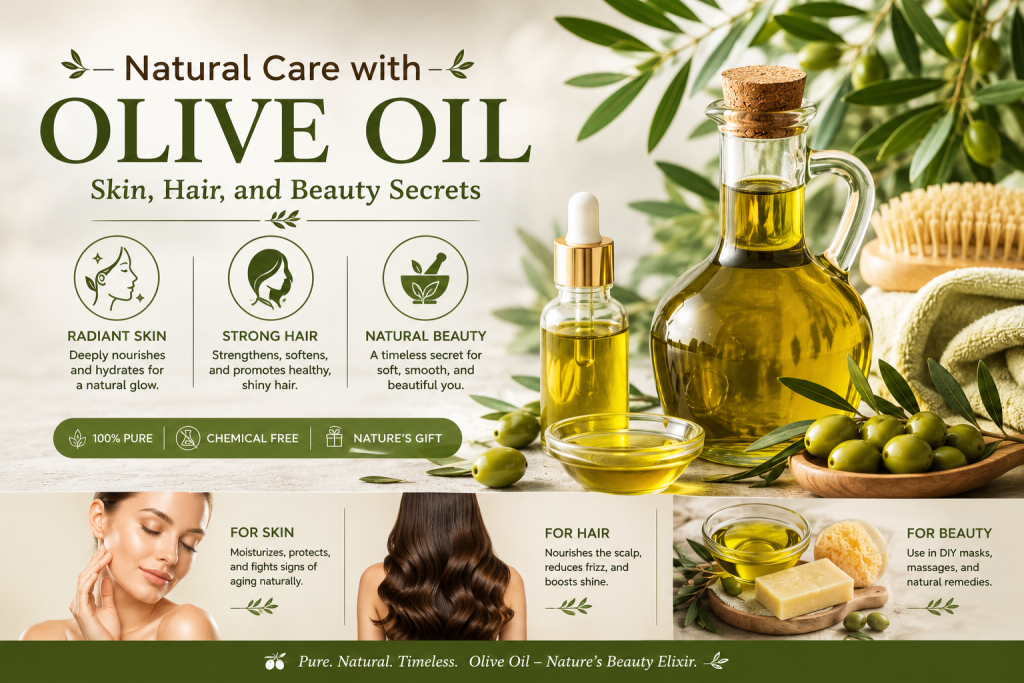
Long before modern skincare aisles existed, Mediterranean households relied on natural cosmetics as their primary beauty routine, and that tradition holds up remarkably well today. Why these cosmetics are special ties back to its fatty acid and vitamin E content, which mimics the skin’s natural oils closely enough to absorb without feeling greasy when used correctly.
How to use it for skin care starts simple: a few drops massaged into damp skin after showering locks in moisture far more effectively than lotion alone. It works especially well for dry patches common during Pakistani winters, while applying it as a pre-wash hair treatment tackles frizz and adds shine without weighing strands down. How to make a DIY skincare blend at home requires nothing fancy either, just mix it with a little sugar for a gentle body scrub, or combine it with honey for a hydrating face mask. This kind of natural skincare costs a fraction of branded products sitting in beauty stores, using an ingredient likely already sitting in your kitchen cabinet.
Frequently Asked Questions (FAQs)
1: Which olive oil is best for daily cooking in Pakistan?
Extra virgin olive oil works well for most everyday cooking, though virgin olive oil offers a more budget-friendly option for high-heat frying.
2: Is olive oil good for weight loss?
Yes, when used in moderation as part of a balanced diet. Its healthy fat profile supports satiety better than many refined oils.
3: Can olive oil be used on face daily?
Most skin types tolerate daily use well, though those with very oily skin may prefer applying it only a few times a week.
4: What is the difference between extra virgin and pure olive oil?
Extra virgin olive oil is unrefined with acidity below 0.8 percent, while pure olive oil is a blend of refined and virgin oil with a milder flavor.
5: Which brand of olive oil is available in Pakistan?
Several imported Spanish and Italian brands are widely available in major supermarkets across Karachi, Lahore, and Islamabad, alongside a growing number of locally distributed options.
Related Links :
https://infusions.pk Organic Herbal Store
https://webhelp.pk IT Solutions & Development Technical Support Company
https://eeshaal.com Travel & Tour Company
https://gulbergoffice.com Real Estate Company
