
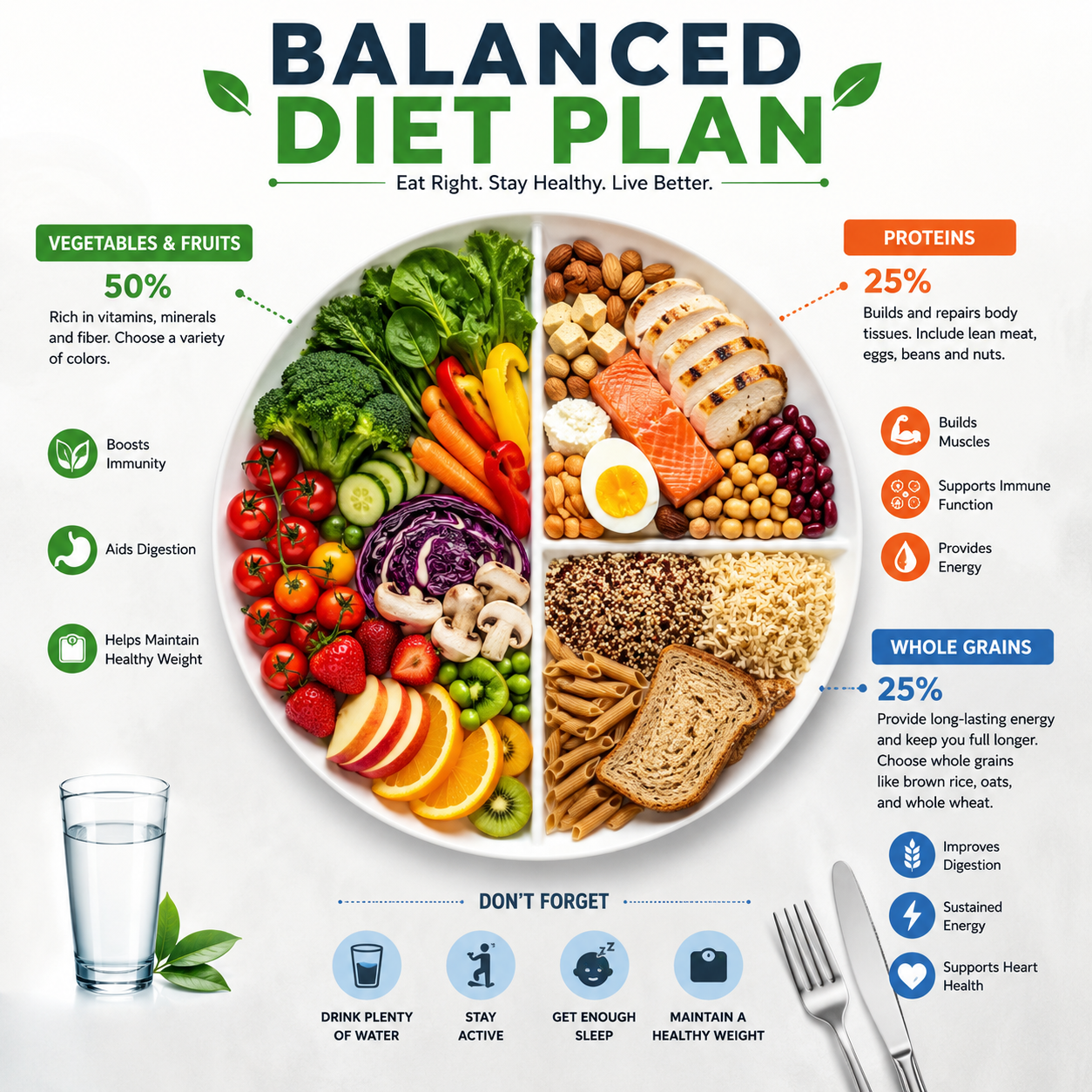
Do you open the fridge every evening and wonder what to cook? Do you skip roti one day and eat extra rice the next, hoping it balances out? Most Pakistani households eat the same three or four dishes on rotation, and that’s exactly where the problem starts. A balanced diet plan isn’t about giving up daal chawal or your favorite karahi. It’s about knowing what your plate actually needs, and then building a routine around it. This guide breaks down everything you need, from food groups to a full weekly menu, written specifically with Pakistani kitchens and budgets in mind.
Why Healthy Eating Matters for Your Weight
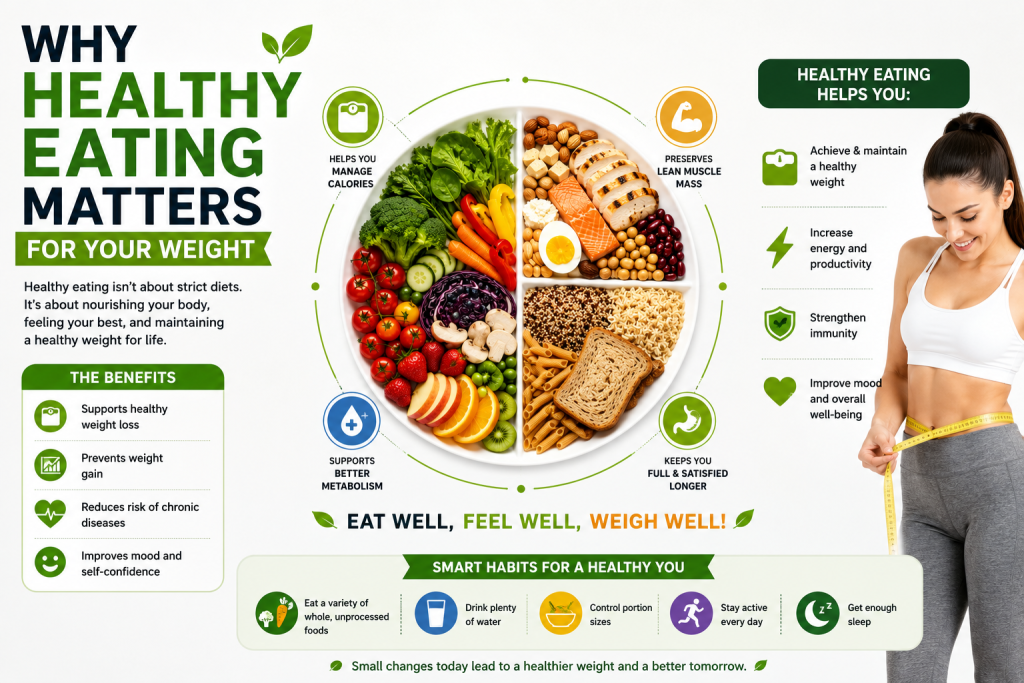
Weight gain in Pakistan often comes from a very specific pattern: heavy oil, refined carbs, and irregular meal timing. Fried parathas for breakfast, biryani for lunch, and namak paray as an evening snack add up fast. A balanced diet plan helps control your caloric intake without forcing you to starve or cut out entire food groups. It simply means eating the right proportions of the right things, consistently.
This matters beyond the number on the scale too. Poor eating habits raise the risk of diabetes and heart disease, both of which are alarmingly common across Pakistan. Following a balanced diet plan supports better energy levels, sharper focus at work, and long-term weight management. Small, steady changes to your daily meals do more for your health than any crash diet ever will.
Key Food Groups for a Balanced Diet
Every proper meal plan rests on four pillars: vegetables, fruits, protein, and dairy. Most Pakistani plates lean too heavily on carbs like rice and roti, while vegetables get pushed to the side as a garnish rather than a main component. A truly balanced diet plan flips that ratio, making vegetables and protein the star of the plate instead of an afterthought.
Vegetables, Fruits, Proteins, and Dairy: What Pakistani Plates Are Missing
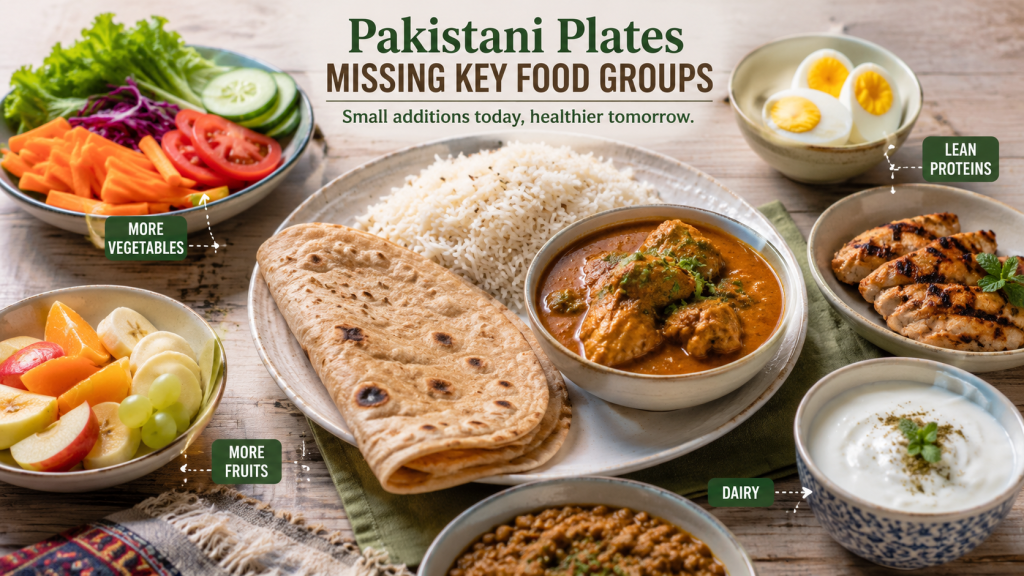
Sabzi should cover half your plate, not a quarter. Seasonal vegetables like karela, bhindi, and palak are cheap, local, and packed with fiber. Fruits such as guava, papaya, and citrus offer vitamins without the sugar spike of desserts. For protein, lean chicken, fish, chickpeas, and daal work well, while dairy like yogurt or lassi supports digestion when eaten without added sugar. Balancing these four groups is the real secret behind a lasting balanced diet plan.
What Is Meal Planning and Why It Works
Meal planning simply means deciding your meals for the week in advance, instead of scrambling every evening. It sounds simple, but it changes everything. When you know Tuesday’s dinner is chicken and sabzi, you buy exactly what you need, nothing more. This single habit cuts food waste, saves money, and removes the daily stress of “aaj kya banayen.”
Meal planning also supports a balanced diet plan by giving you control over portions and ingredients before hunger takes over. Restaurants and fast food joints load their meals with added fat, sugar and sodium, and portion sizes are usually far bigger than what your body actually needs. Comparing cooking at home vs eating out, home meals almost always win on both cost and nutrition. A registered dietitian would tell you the same thing: planning ahead is the single biggest predictor of eating well.
How to Create a Simple Meal Plan Step by Step
Start small. Pick one evening, maybe Friday after Jummah, and set aside thirty minutes to think through the week ahead. Write down seven days on a page, and mark which nights you’ll actually cook versus which ones are busy with work or family visits. Busy days are perfect for quick sheet pan meals or crock pot meals, since they need minimal effort once the ingredients are prepped.
A Beginner-Friendly Weekly Planning Method
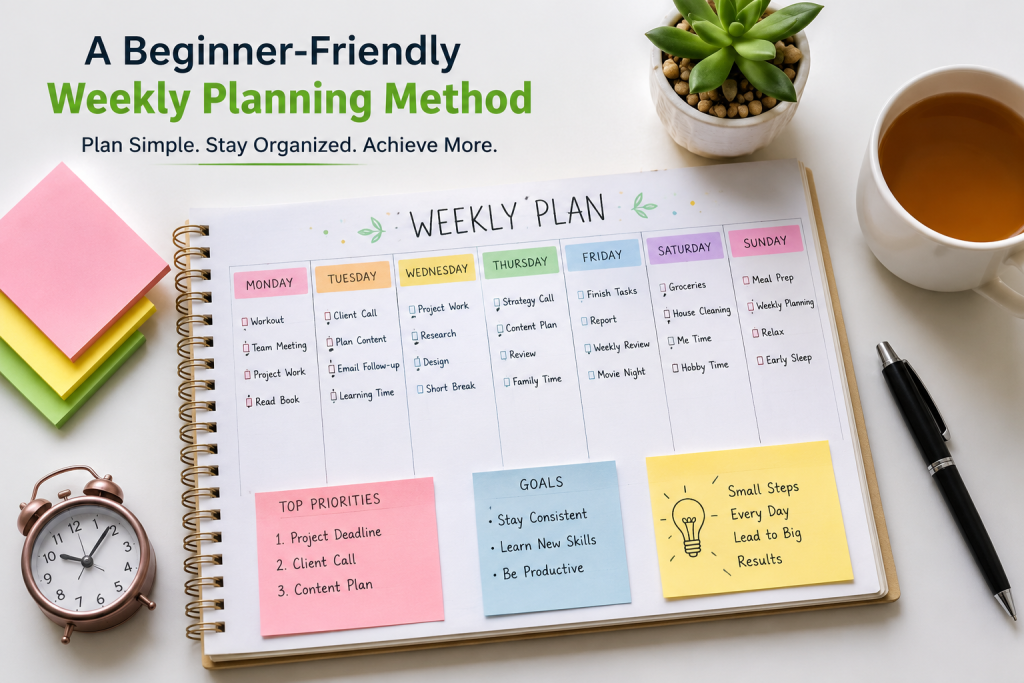
Check your kitchen before shopping. Look at your pantry staples, things like rice, atta, and daal that you probably already have. Build your weekly recipes around what’s missing, not what’s already sitting in your cabinet. Many people now use a shopping list app or one of several meal planning apps to keep everything organized on their phone, which makes sabzi mandi trips faster and less overwhelming.
Sample Meal Plan for a Full Week
Seeing a real example makes this far easier to follow than any list of rules. Here’s a sample balanced diet plan built around everyday Pakistani meals, mixing home cooking with realistic portions.
| Day | Breakfast | Lunch | Dinner |
|---|---|---|---|
| Monday | Boiled eggs with brown bread | Daal chawal with salad | Grilled chicken with sabzi |
| Tuesday | Oats with fruit | Chicken karahi (light oil) with roti | Leftover chicken karahi wrap |
| Wednesday | Paratha (once a week is fine) with yogurt | Palak with roti | Fish curry with brown rice |
| Thursday | Fruit chaat with yogurt | Chana chaat | Vegetable pulao |
| Friday | Omelette with toast | Bhindi with roti | Beef or lentil soup |
| Saturday | Smoothie bowl | Grilled sandwich | Family dinner out (controlled portion) |
| Sunday | Halwa puri (moderate portion) | Leftover soup or pulao | Light khichdi with yogurt |
This table shows how nutritious meals don’t need to be complicated or expensive. It’s really just about rotating weekly recipes and staying consistent.
Smart Ways to Repurpose Leftovers
Nobody wants to eat the exact same dish three days running, and honestly, you don’t have to. Leftovers are one of the easiest ways to save time while sticking to your balanced diet plan. Leftover roast chicken turns into a quick sandwich filling or gets tossed into fried rice with frozen vegetables. Extra daal makes a great paratha stuffing the next morning.
Repurposing leftovers also plays a direct role in reducing food waste, something that matters even more given rising grocery prices in Pakistan. Keep a few freezer meals ready too, portioned and labeled, so a busy Tuesday doesn’t automatically mean ordering out. Defrosting food the night before, rather than rushing it under hot water, keeps both texture and nutrition intact.
Common Myths vs Facts About Intuitive Eating
There’s a lot of confusion online about what “eating right” actually means, and Pakistani social media isn’t exactly free of bad advice either. Sorting fact from fiction is essential if you want your balanced diet plan to actually work long term, rather than being abandoned after two weeks of frustration.
Debunking Diet Myths Common in Pakistan
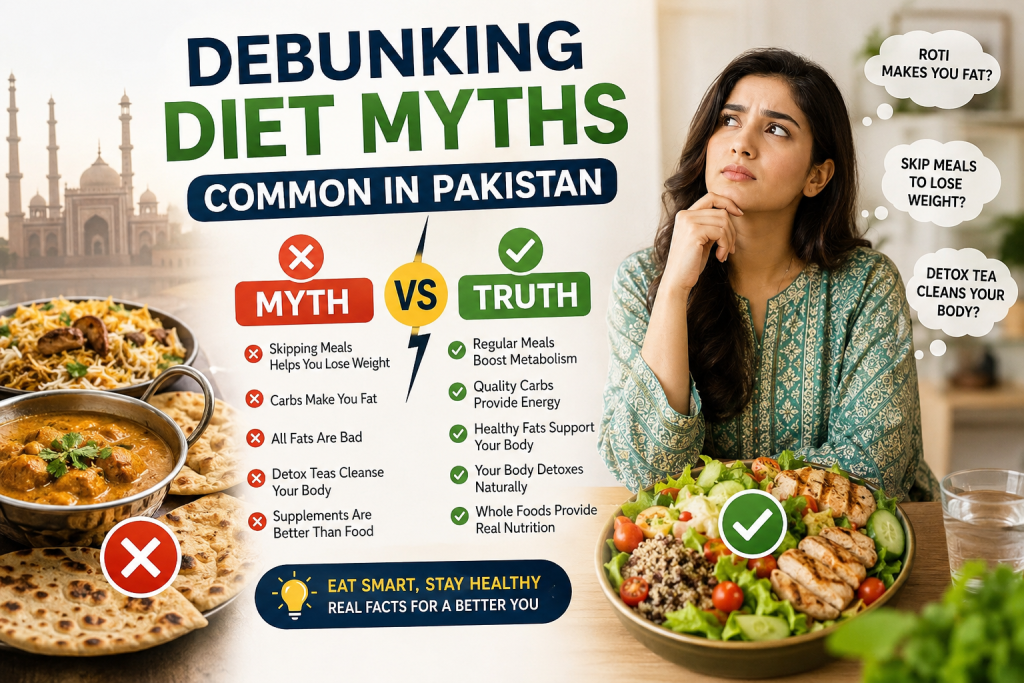
Roti doesn’t make you fat, overeating does. Skipping meals doesn’t speed up weight loss, it usually backfires by triggering overeating later in the day. Ghee in small amounts isn’t the enemy either, moderation matters more than total elimination. Intuitive eating simply means listening to your body’s hunger and fullness signals instead of following extreme rules, and it works far better alongside a structured balanced diet plan than against it.
Easy Tips to Make Meal Planning Stress-Free
Meal planning shouldn’t feel like homework. Keep a running list on your phone of five or six meals your family genuinely enjoys, and rotate through them instead of reinventing your menu every single week. This alone removes most of the daily decision fatigue around food.
Batch cooking on a Sunday, prepping daal or marinating chicken for the week, saves enormous time during busy weekdays. Prepping vegetables in advance, washing and chopping on your day off, means dinner comes together in fifteen minutes rather than forty five. A flexitarian diet, mixing plant-based meals a few days a week with meat on others, also stretches your grocery budget further while keeping your balanced diet plan varied and interesting.
Food Assistance and Helpful Resources
Eating well shouldn’t depend on a big budget. Local sabzi mandis usually offer better prices and fresher produce than supermarkets, especially for seasonal vegetables and fruit. Community kitchens and NGOs across Pakistan, including organizations like Akhuwat and Saylani Welfare, also provide food support for families facing financial strain.
For a truly personalized approach, especially if you’re managing diabetes or bariatric nutrition needs after surgery, consulting a registered dietitian is worth the investment. They can adjust your balanced diet plan around your specific health goals, medical history, and even cultural food preferences, something a generic online plan simply can’t do.
Building a healthy lifestyle doesn’t happen overnight, and nobody expects perfection from day one. Start with one small change this week, maybe swapping fried paratha for boiled eggs, or planning just three dinners instead of scrambling daily. Over time, these small shifts compound into a genuinely sustainable balanced diet plan that fits real Pakistani life, real budgets, and real family routines.
Frequently Asked Questions (FAQs)
What is a balanced diet plan?
A balanced diet plan is a daily eating pattern that includes the right proportions of vegetables, fruits, protein, and dairy, matched to your body’s actual energy needs.
How can I make a balanced diet plan on a tight budget in Pakistan?
Focus on seasonal vegetables from your local sabzi mandi, buy daal and rice in bulk, and limit expensive processed snacks. Home cooking almost always costs less than eating out.
Is roti bad for weight loss?
No. Roti in moderate portions, paired with vegetables and protein, fits well into a balanced diet plan. The issue is usually portion size and what’s eaten alongside it, not roti itself.
How many meals should I plan for a week?
Most people don’t need to cook seven days straight. Planning four or five home-cooked meals, with one night for leftovers and one for eating out, keeps things realistic.
Can I follow a balanced diet plan without giving up Pakistani food?
Absolutely. Dishes like daal chawal, grilled chicken, sabzi, and yogurt are already nutritious. The key is portion control and reducing excess oil, not eliminating traditional meals.
Related Links :
https://infusions.pk Organic Herbal Store
https://webhelp.pk IT Solutions & Development Technical Support Company
https://eeshaal.com Tour & Travel Company
https://gulbergoffice.com Real Estate Company
