
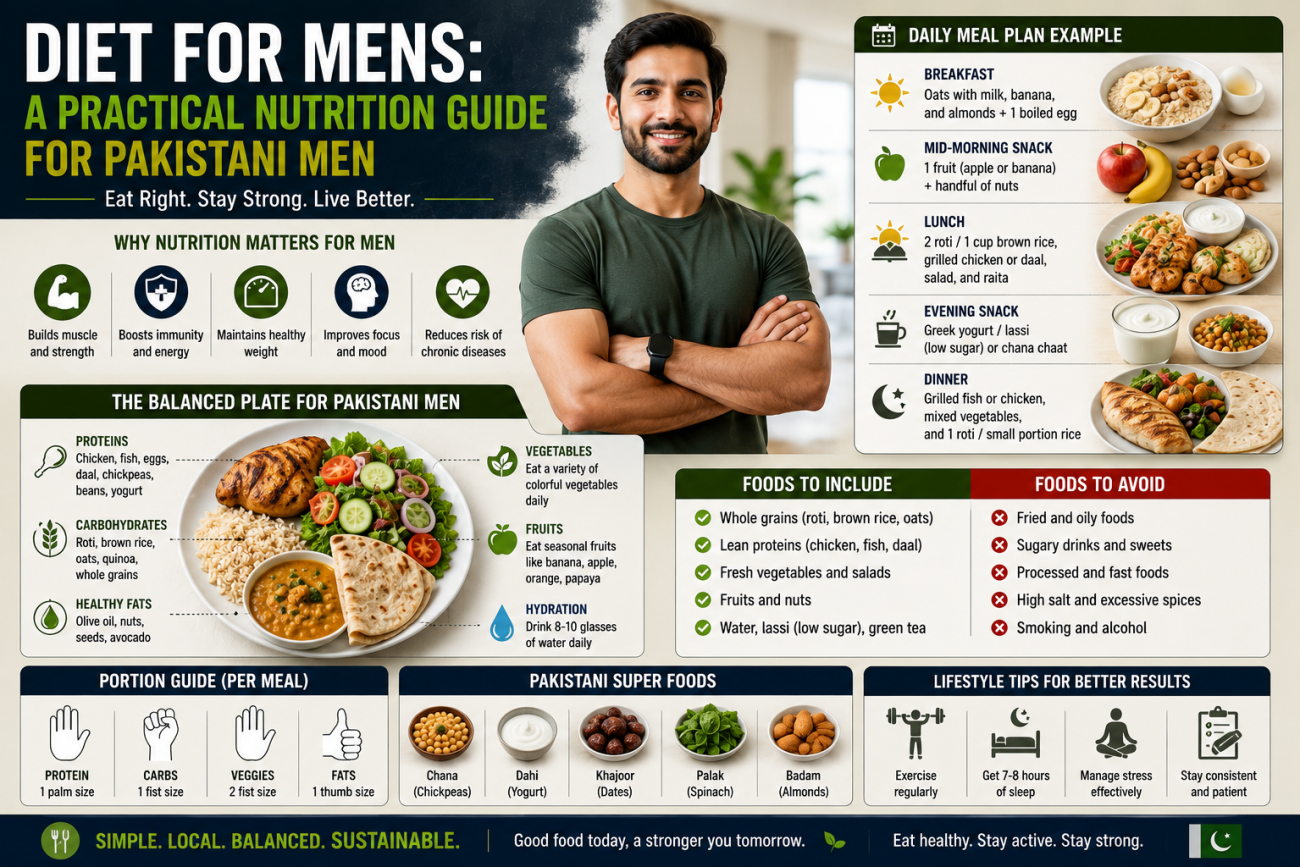
Pakistani men grow up on meat, rice and roti, yet balance often gets left off the plate. A solid diet for mens is not about giving up biryani forever. It is about understanding what your body actually needs at each stage of life, then building daily habits around that. This guide walks through food groups, age-specific needs and common gaps in a typical Pakistani man’s plate, so you can make smarter choices without losing the meals you love.
Why Healthy Eating Matters

What you eat shapes far more than your weight. A poor diet for mens raises your risk of heart disease, type 2 diabetes and even mental health struggles like anxiety, and doctors across Pakistan are seeing these conditions show up earlier than ever. Getting your nutrition needs right protects your energy today and your health decades from now.
This is not about following a rigid plan someone else designed. It is about learning your eating pattern and adjusting it sensibly. Once you understand how food groups work together, a diet for mens stops feeling restrictive and starts feeling like common sense.
Build Your Meals Around Fibre-Rich Carbs
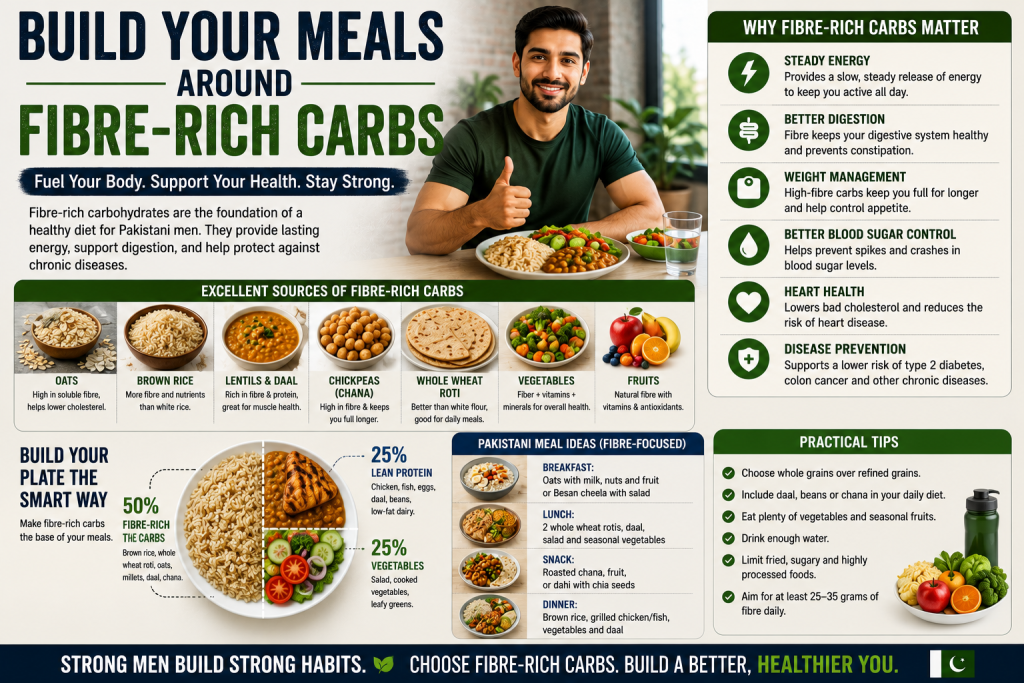
Roti, rice and grains form the backbone of a diet for mens in Pakistan, and there is nothing wrong with that. The real question is which version you reach for. Wholewheat roti and brown rice digest more slowly than refined versions, keeping your energy steadier through the day. Grain serving sizes should shift with age too, since older men generally need slightly less than younger, more active men.
Swapping naan for a wholewheat roti at dinner is a small change that adds up fast, and it fits easily into any diet for mens routine. You do not need to eliminate carbs, since they are one of your main energy needs sources. Just choose the fibre-rich version whenever you reasonably can, and pair it with vegetables rather than extra oil.
Load Up on Fruits and Vegetables

Aim for roughly five to six vegetable servings and two fruit servings daily, a target most dietary guidelines agree on for any diet for mens regardless of country. Pakistan’s seasonal produce makes this easier than it sounds. Karela and saag in winter, mangoes and guavas in summer, give you variety without much effort or expense.
Whole fruit beats juice every time, since juice strips away the fibre that slows sugar absorption. A glass of fresh orange juice might feel virtuous, but an actual orange does more for your body. Treat juice as an occasional extra, not a daily staple, and your energy levels will thank you.
Add More Fish and Healthy Fats to Your Diet

Most men need roughly 60 grams of protein daily, which sounds like a lot until you realise 100 grams of rump steak alone gets you most of the way there. Fish deserves more space on the plate too. Rohu and pomfret are widely available and rich in omega-3 fats, which support heart and brain function far better than red meat alone can.
Fat quality matters as much as fat quantity. Swapping desi ghee and butter for olive oil, nuts or avocado can genuinely shift your cholesterol numbers over time. This is not about cutting fat entirely, since your body needs it, but about choosing the type that works in your favour.
Cut Down on Saturated Fat, Sugar, and Salt

Saturated Fat
Fried snacks, red meat and cream-heavy dishes are Pakistani kitchen staples, yet saturated fat quietly raises cholesterol over years of regular consumption. Grilling instead of frying, trimming visible fat and choosing reduced-fat dairy are small swaps that protect your heart without demanding a complete diet overhaul.
Sugar
Chai culture keeps sugar intake high across Pakistan, and mithai only adds to it. Reading labels on packaged snacks helps, since sugar often hides under different names. Cutting your daily tea sugar even slightly compounds into real savings over a full year of habit.
Salt
Local cuisine leans heavily on salt and masala, often without anyone noticing the total. Adults should stay under six grams a day, roughly a teaspoon. Since restaurant and packaged food already carries plenty of hidden salt, cooking at home gives you the clearest control over your intake.
Get Active and Maintain a Healthy Weight
Diet alone will not get you to a healthy weight for men without some movement alongside it. Thirty minutes of moderate activity daily, even brisk walking, meaningfully lowers your risk of chronic disease. Desk-bound jobs make this harder, so building movement into your day deliberately matters more than ever.
Weight management works best as a combination, not a single lever. Eating well without moving enough, or exercising hard while eating poorly, both fall short of real results. Small, consistent effort on both fronts beats occasional extreme attempts at either.
Hydration and Meal Timing Matter Too

Water should be your default drink, especially through Pakistan’s long, hot summers when dehydration creeps up quickly. Sugary soft drinks may feel refreshing in the moment, but they add empty calories without solving your actual thirst or supporting your daily energy needs.
Skipping breakfast, or sehri during fasting months, usually backfires by triggering overeating later in the day. A simple plate of eggs, daliya or a lightly oiled wholegrain paratha gives your body steady fuel. Consistent meal timing keeps your metabolism working the way it is meant to.
Nutrition Needs by Age and Gender
Nutrition needs differ with gender and age, which means a twenty-five-year-old and a seventy-year-old cannot follow identical eating plans. Men aged 19 to 50 generally need more energy and slightly more protein for muscle maintenance, while men aged 50 to 71 need nutrient-dense choices without excess kilojoules. Past 71, dairy and calcium needs rise even as grain requirements ease slightly.
| Age group | What changes |
|---|---|
| 19–50 years | Higher energy needs, more protein for active lifestyles |
| 50–71 years | Nutrient-dense foods, fewer processed extras |
| 71+ years | More dairy and calcium, slightly fewer grain servings |
Women’s nutrition needs differ from men’s too, largely due to variations in body composition and hormonal factors. If you are unsure where you personally fall, an accredited dietitian can offer tailored dietary advice suited to your exact stage of life.
Common Diet Mistakes and What Might Be Missing
Most Pakistani men’s diets share familiar gaps: too little fibre, too much fried food and inconsistent meal timing. Micronutrient shortfalls are common too, particularly Vitamin D despite abundant sunshine, along with magnesium, Vitamin B12, potassium and iodine, each playing a distinct role in energy and heart health.
| Nutrient | Good local sources |
|---|---|
| Vitamin D | Oily fish, eggs, dairy, mushrooms |
| Magnesium | Beans, fish, leafy greens |
| Vitamin B12 | Meat, poultry, eggs, dairy |
| Potassium | Potatoes, bananas, avocado |
| Iodine | Eggs, milk, yoghurt |
A common myth worth retiring is that more meat automatically builds more strength, when in reality quality and balance matter far more than sheer quantity. Skipping meals to lose weight is another mistake, since it usually leads to overeating later and disrupts your natural eating pattern.
FAQs
What is the best diet for mens in Pakistan?
The best diet for mens balances wholewheat carbs, vegetables, fish and lean protein while limiting fried food and added sugar.
How much protein do men actually need daily?
Most men need around 60 grams of protein daily, easily met through meat, fish, eggs, dairy and lentils.
Does a diet for mens change with age?
Yes, younger men need more energy and protein, while older men need more nutrient-dense, calcium-rich foods.
What nutrients are commonly missing in men’s diets?
Vitamin D, magnesium, B12, potassium and iodine are the most common gaps, even in a fairly balanced diet.
Can I still eat rice and roti on a healthy diet?
Yes, choosing wholewheat roti or brown rice and watching portion size keeps carbs working in your favour.
Final Thoughts
A better diet for mens does not mean giving up the food you love, and it certainly does not mean chasing perfection. It means understanding your food groups, respecting your daily kilojoules needs and adjusting gradually as you age. Small, steady choices beat dramatic overhauls every time.
If you have specific health concerns, a conversation with your doctor is worth more than any generic guide. For structured international reference, the Australian Dietary Guidelines outline the five food groups clearly, and organisations like Nutrition Australia and Dietitians Australia offer useful tools including a kilojoule needs calculator for anyone wanting precise numbers. A quick GP or doctor consultation remains the safest starting point before making major changes to your diet.
